When the part is
wearing out too fast.
Ultra-High Molecular Weight Polyethylene is what you move to when steel galls, nylon swells, or HDPE wears through on the same line every quarter. Molecular weight in the millions gives it abrasion resistance that outlasts carbon steel, a surface slick enough to run dry, and enough toughness that it does not crack in a cold plant. It is the material behind most chute liners, wear strips, and guide rails in Northern Nevada.
Stock & Sizes
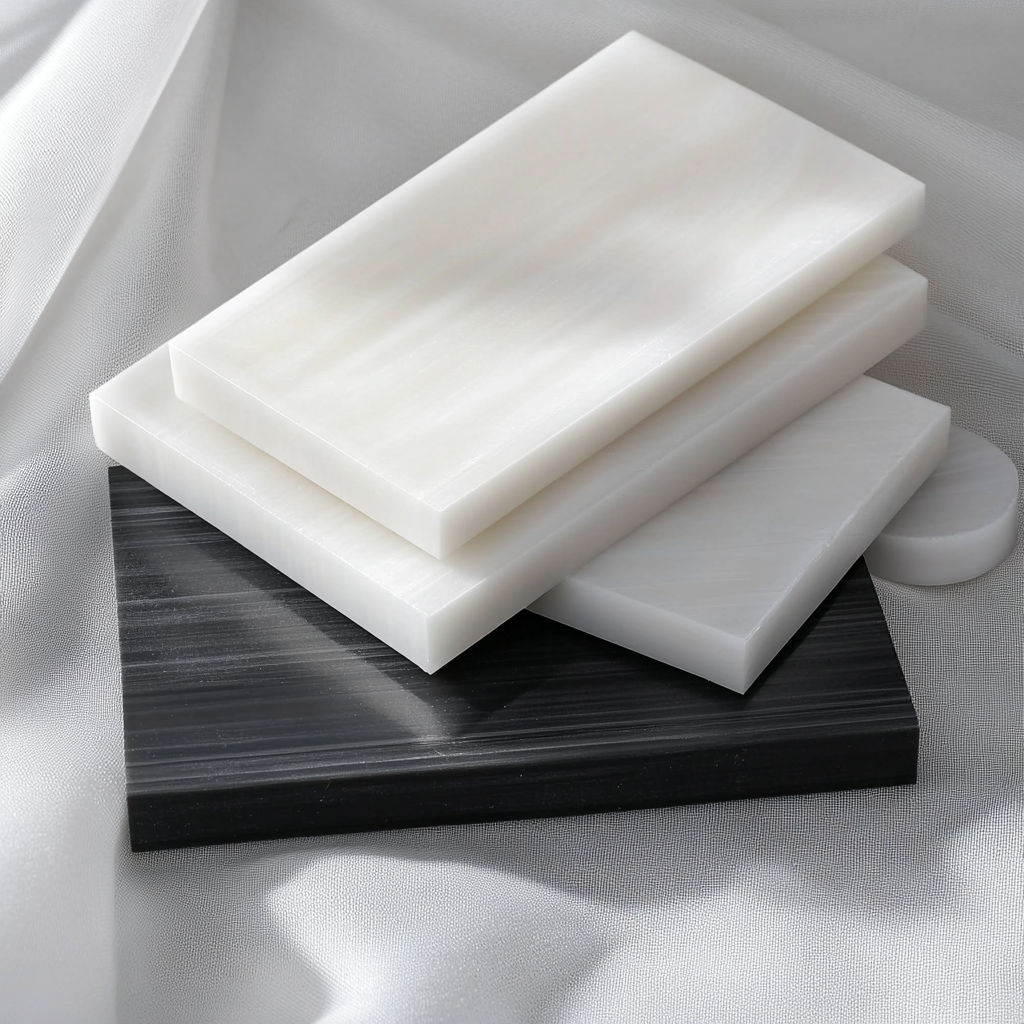
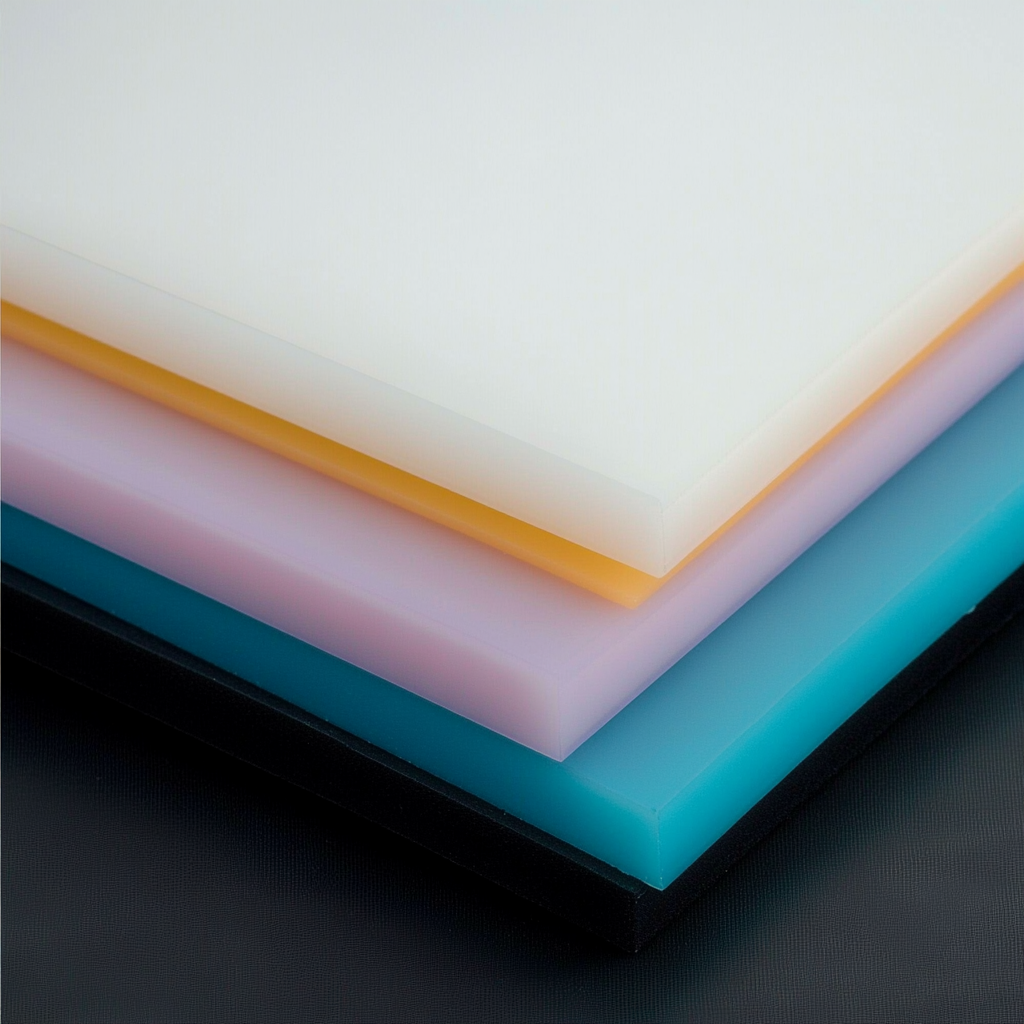
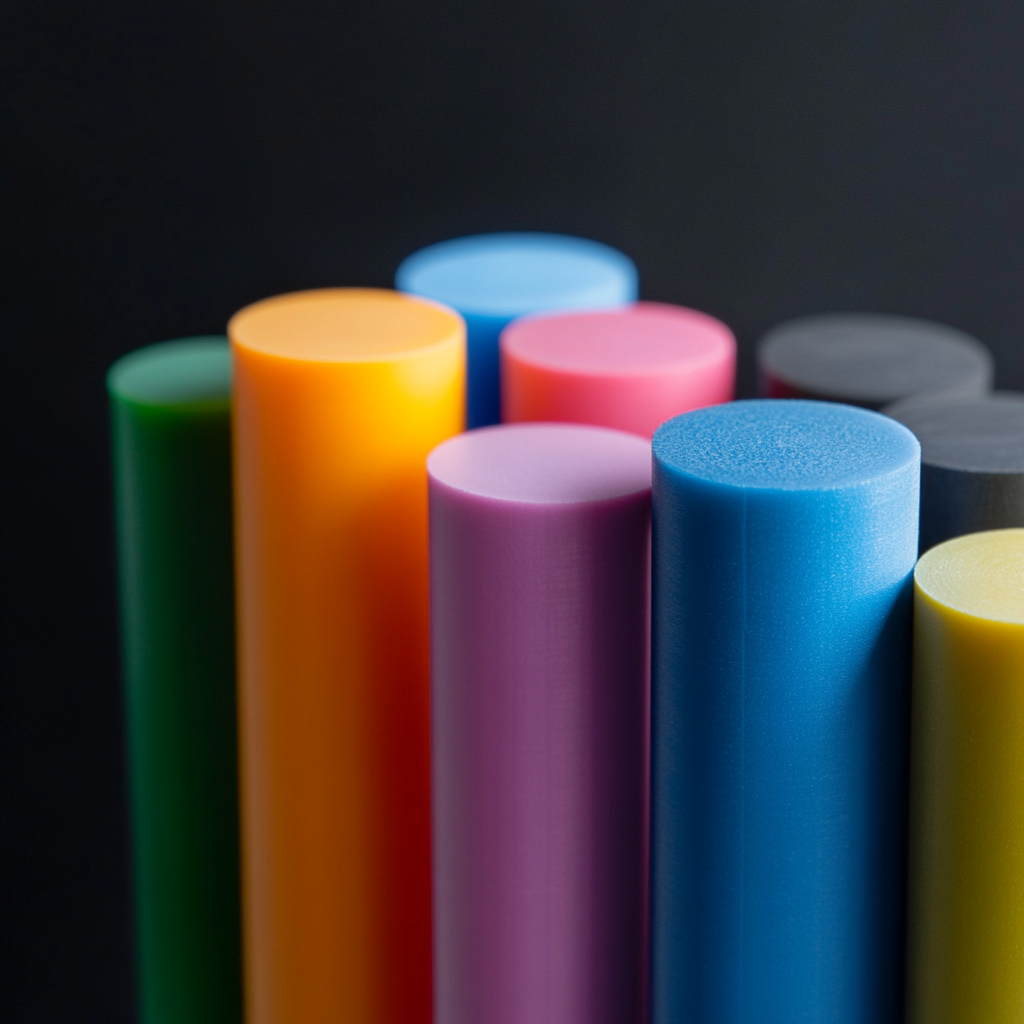
We stock UHMW sheet and rod in natural (white) and black, in the thicknesses below. Natural virgin grade is the one to specify for food contact and FDA work. Black is UV-stabilized and the right call for anything living outdoors — outrigger pads, dock bumpers, exposed liners. The gauges are drawn edge-on beside each size, all at the same scale, so you can see the difference rather than work it out. Thicker resists deflection and lasts longer in wear; thinner costs less and forms more easily.
What’s on the rack in Sparks
| Thickness | Decimal | Edge on, to scale | Cut to size |
|---|---|---|---|
| 1/8″ | 0.125″ | Same day | |
| 3/16″ | 0.1875″ | Same day | |
| 1/4″ | 0.250″ | Same day | |
| 3/8″ | 0.375″ | Same day | |
| 1/2″ | 0.500″ | Same day | |
| 3/4″ | 0.750″ | Same day | |
| 1″ | 1.000″ | Same day |
Seven thicknesses on the floor, cut to your dimensions the same day — one piece or a full sheet. Above 1″ we source to order, up to 4″. Tell us the thickness and we will confirm whether it is a same-day cut or a short lead time before you plan around it.
Cut to size the same day in our Sparks shop, from one piece to a full sheet. If a liner is wearing out on a schedule you can predict, tell us the interval and we will keep the profile on file so the replacement is a phone call.
Typical Properties
| Property | Typical value | What it means on the job |
|---|---|---|
| Density | 0.93–0.94 g/cm³ | Floats. Roughly 1/8 the weight of steel |
| Molecular weight | 3–6 million g/mol | The property that drives the wear resistance |
| Tensile strength | 3,100–4,000 psi | Lower than HDPE — it is a wear material, not a structural one |
| Elongation at break | 200–525% | Deforms rather than cracking under shock load |
| Izod impact, notched | No break | Survives impact that fractures acetal, nylon, and filled grades |
| Coefficient of friction | 0.10–0.22 (dynamic, on steel) | Self-lubricating. Runs without grease |
| Service temperature | −200°F to +180°F | Cryogenic-capable; softens and creeps above roughly 180°F |
| Water absorption | < 0.01% | Dimensionally stable wet. Will not swell like nylon |
| Chemical resistance | Excellent | Resists most acids, alkalis, and solvents at ambient |
| FDA / USDA | Compliant (virgin grades) | Approved for direct food contact |
| UV stability | Poor unless UV-stabilized | Specify black or UV grade for sustained outdoor exposure |
Typical published values for virgin UHMW-PE, given as a design starting point. For load-bearing, food-contact, or regulated work, ask and we will supply the mill certification for the specific sheet.
Why It Gets Specified, on Charts
Roughly a third the friction of dry steel, with no lubrication at all. That is what stops carryback in a wet chute and what lets a guide rail run near clean product without grease. It is also why nothing sticks to it — including adhesive.
About an eighth the weight of steel at the same thickness. A chute liner two people can lift and bolt up in a shift, instead of a plate that needs a welder and a lift. On a scheduled changeout, that difference is most of what the job actually costs.
UHMW is a cold-and-ambient material. It handles cryogenic service better than almost anything, but above about 180°F it softens and creeps under load. If your application runs hot and loaded, UHMW is the wrong answer and we will tell you so rather than sell you a liner that goes soft.
Where It Gets Used
UHMW or HDPE?
This is the question we get most, and the honest answer is that they are not competing for the same job. UHMW is a wear material; HDPE is a structural and containment material. If the part slides, rubs, or gets hammered by abrasive product, UHMW pays for itself. If the part holds liquid, gets welded into a tank, or just needs to be a rigid food-safe surface, HDPE is cheaper and easier to fabricate. Full side-by-side comparison with the numbers →
Fabrication
UHMW machines cleanly and routes well, but it does not glue and it does not solvent-weld — parts get mechanically fastened, and holes need clearance for thermal movement because it expands roughly seventeen times as much as steel. We cut to size, CNC rout, bevel, countersink, and drill it here in Sparks. Send a drawing, a template, or the worn-out original — we have made plenty of liners from a part someone pulled off a chute and dropped on the counter.
Common Questions
How much longer does UHMW last than steel in a chute?
It depends entirely on the ore, the impact angle, and the moisture, so anyone quoting a single multiplier is guessing. What is consistent is that UHMW wears by sliding abrasion rather than gouging, sheds wet material instead of building carryback, and can be swapped by two people without a welder. Tell us what you are lining and how fast the current liner goes, and we will size the thickness against that.
Can UHMW be welded or glued?
Glued, no — nothing bonds to it reliably, and that slick surface is exactly why. Welded, technically yes: UHMW can be hot-gas welded with a matching filler rod, but the joint only reaches roughly 60 to 80% of parent strength, so we do not build anything that has to hold pressure or load out of welded UHMW. In practice parts get bolted, countersunk, or clamped. If you need a welded assembly or a fabricated tank, that is an HDPE or polypropylene job and we can weld those.
Will it hold up outside?
Natural UHMW will chalk and degrade in sustained UV. Specify black or a UV-stabilized grade for anything permanently outdoors. Indoors it lasts effectively forever.
What temperature can it take?
Roughly −200°F to +180°F. It stays tough at cryogenic temperatures, which is unusual, but it softens and creeps under load above about 180°F. If your application runs hot and loaded, tell us — that is where UHMW is the wrong answer and we will say so.
Is it food safe?
Virgin natural UHMW is FDA and USDA compliant for direct food contact. Reprocessed and pigmented grades generally are not. If it is going in a food plant, specify virgin and we will provide the certification.
Do you keep it in stock or is it a special order?
Stocked in Sparks, in natural and black, from 1/8″ through 1″, and sourced to 4″. Cut to size same day. A wear strip is not something you should be waiting a week for while a line sits down.
One hour. Tomorrow. Or today when it can’t wait.
We stock it here and we run our own van. Three ways to get material — take the one you need.