The easy one
to fabricate.
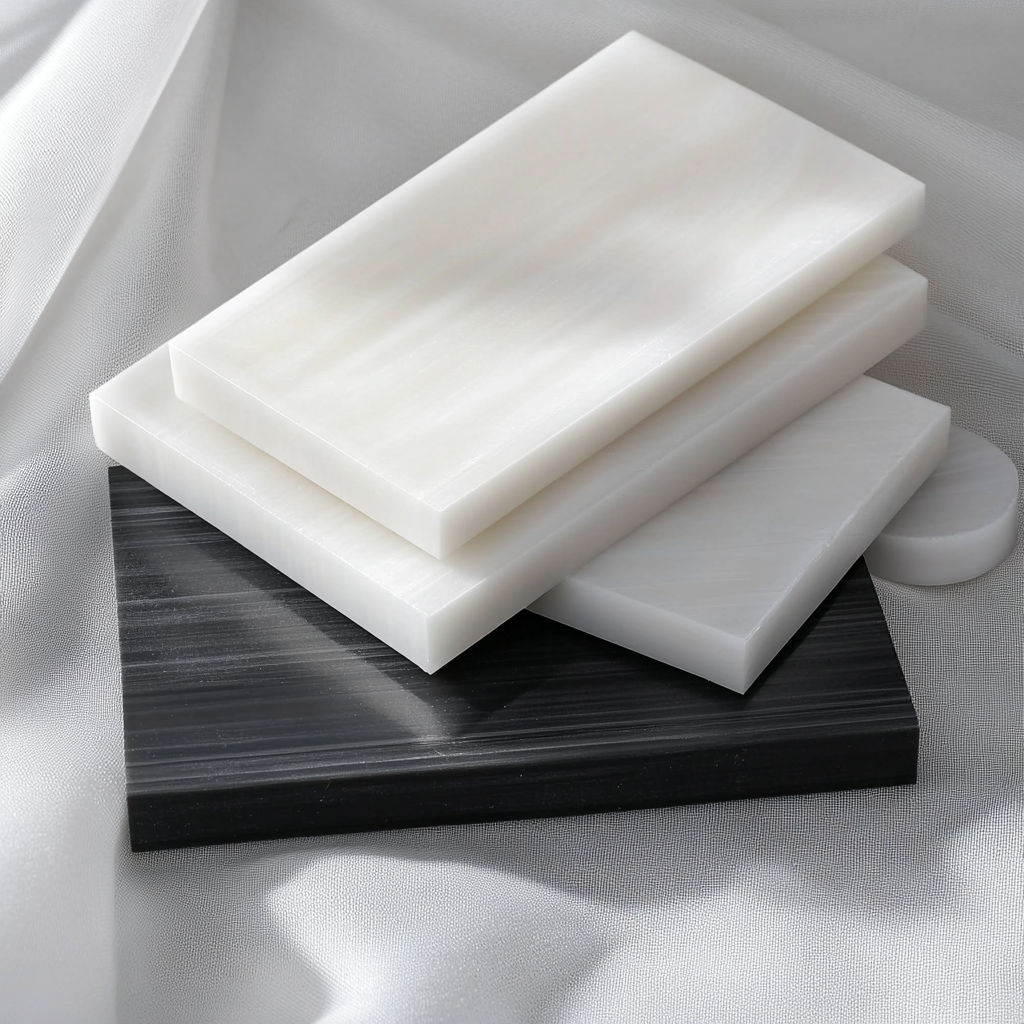
ABS is what you reach for when the part has to get made rather than admired. It machines without chipping, thermoforms over a wide window, takes paint, and solvent-cements into a real structural joint — three things acrylic does badly and polyethylene cannot do at all. It is tough, it is cheap, and it is opaque. One hard rule comes with it: ABS is an indoor material.
Stock & Sizes
What’s on the floor in Sparks
| Thickness | Decimal | Edge on, to scale | Cut to size |
|---|---|---|---|
| 1/16″ | 0.0625″ | Same day | |
| 1/8″ | 0.125″ | Same day | |
| 3/16″ | 0.1875″ | Same day | |
| 1/4″ | 0.250″ | Same day |
Four thicknesses, cut to your dimensions the same day — one piece or a full sheet. Anything else on this page is a normal order, not a special one. Call and we will tell you what is on the rack today versus what is a short lead time.
| Color | Thickness | Sheet | Regular | Sale |
|---|---|---|---|---|
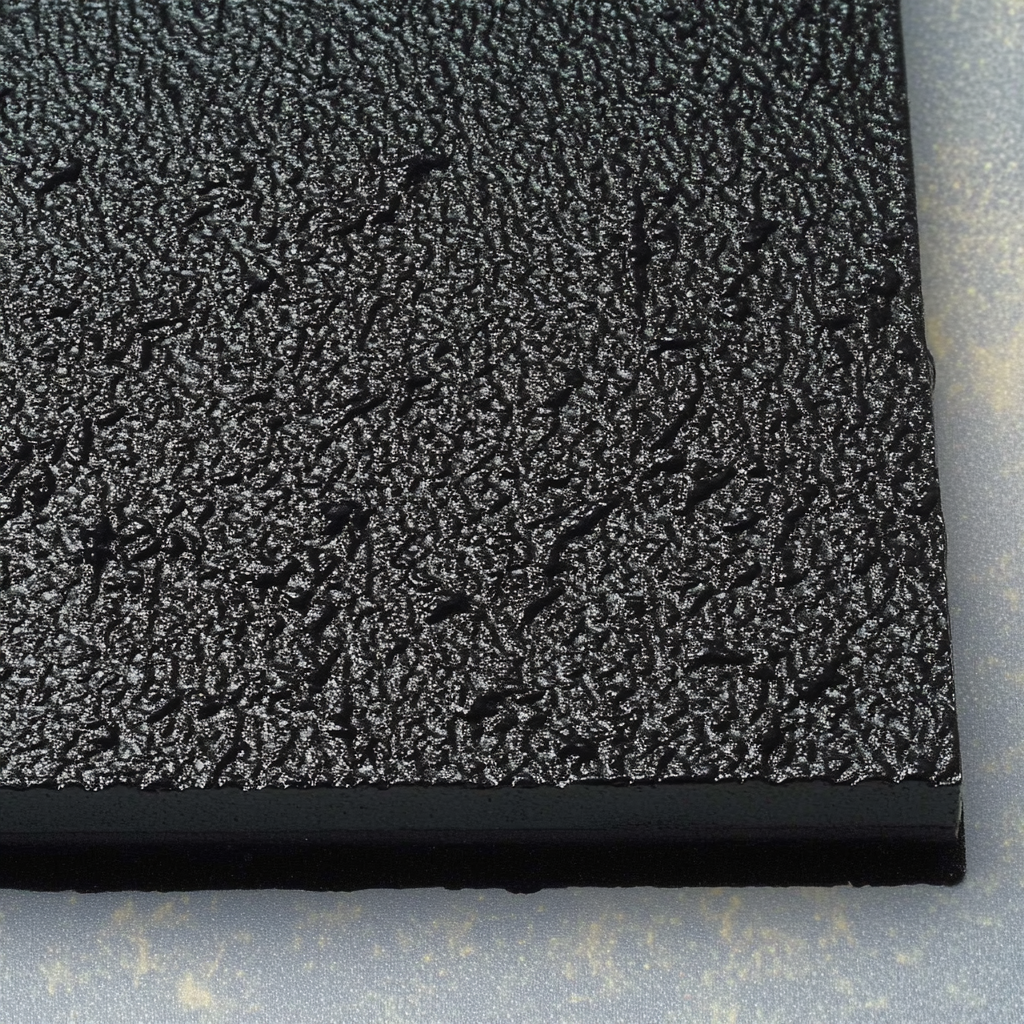
| Black haircell | 1/8″ | Full sheet | $105 | $78.75 |
| Black haircell | 3/16″ | Full sheet | $149 | $111.75 |
| Black haircell | 1/4″ | Full sheet | $195 | $146.25 |
| White haircell | 1/8″ | Full sheet | $115 | $86.25 |
| White haircell | 3/16″ | Full sheet | $149 | $111.75 |
| White haircell | 1/4″ | Full sheet | $220 | $165 |
Through Dec 31 or while stock lasts. Sale applies to the full sheets listed. Prices do not include sales tax. Account customers get their account price or the sale price, whichever is lower.
What We Can Order In
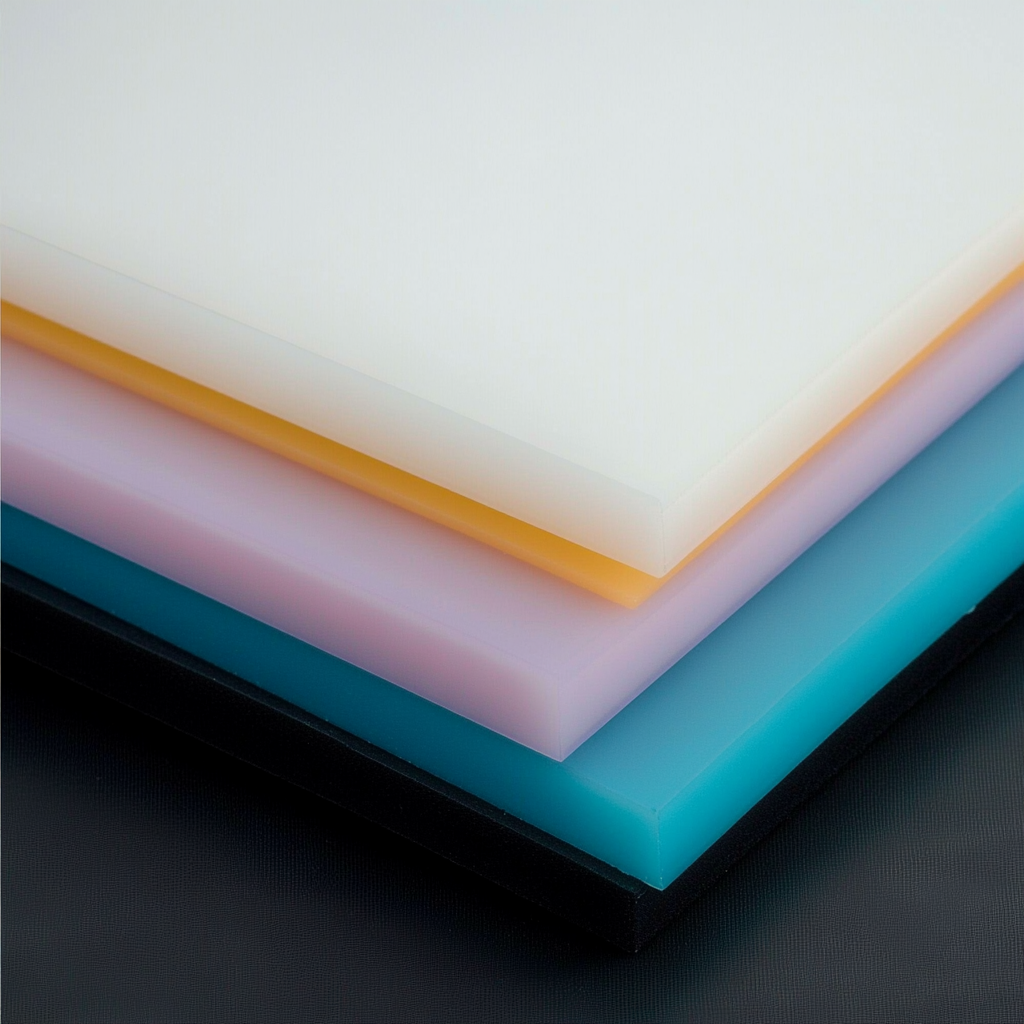
Stocked thicknesses are ours; the order-in formats are Rowmark’s published range for their ABS sheet products. We are a Rowmark distributor, so a color or finish change is routine. Need heavier plate than 0.325″ for a machined part? That comes from a different mill — tell us the thickness and we will price it, but have that conversation before you finalize the drawing rather than after.
Two limits worth knowing before you spec it
Sun. ABS is not a weathering material. The rubber phase that gives it impact strength breaks down under UV, so you get color shift and chalking first and a more brittle sheet over time. Rowmark designate their ABS sheet indoor use, and that reflects the material generally rather than anything specific to the brand. For outdoor work the answer is a capped grade — see the FAQ below.
Cold. ABS gives up a good deal of its impact strength as temperature drops. Notched Izod runs about 7.7 ft·lbs/in at room temperature and roughly 2.7 at −40°F. That is worth knowing if the part lives in an unheated building or outdoors here — something that takes a knock fine in a warm shop is less forgiving in January. Tell us where it lives and we will size the thickness for it or suggest a tougher material.
Typical Properties
| Property | Test method | Typical value |
|---|---|---|
| Physical | ||
| Specific gravity | ASTM D 792 | 1.04–1.05 |
| Water absorption, 24 hr | ASTM D 570 | 0.2–0.4% |
| Mechanical | ||
| Tensile strength | ASTM D 638 | 4,500–6,000 psi |
| Tensile modulus | ASTM D 638 | 290,000–340,000 psi |
| Elongation at break | ASTM D 638 | 20–30% |
| Flexural strength | ASTM D 790 | 8,000–10,500 psi |
| Flexural modulus | ASTM D 790 | 270,000–340,000 psi |
| Izod impact, notched @ 1/8″, 73°F | ASTM D 256 | 5–8 ft·lbs/in (typ. 7.7) |
| Izod impact, notched @ −40°F | ASTM D 256 | ~2.7 ft·lbs/in |
| Rockwell hardness | ASTM D 785 | R 95–105 |
| Thermal | ||
| Heat deflection @ 264 psi | ASTM D 648 | 180–200°F |
| Heat deflection @ 66 psi | ASTM D 648 | 195–205°F |
| Max continuous service temperature | — | ~160°F |
| Forming temperature (sheet surface) | — | 300–390°F |
| Coefficient of thermal expansion | ASTM D 696 | 0.000042–0.000056 in/in/°F |
| Flammability | ||
| UL 94 rating | UL 94 | HB (standard grades) |
Typical published values for extruded ABS sheet, cross-checked across several mill data sheets. Grade spread on ABS is unusually wide — utility, prime and low-gloss grades can differ by 2× on impact strength alone — so treat this as a design starting point and ask us for the mill data sheet on the specific sheet if the number matters. UL 94 HB is the lowest flammability rating: ABS is combustible, and any building, transit or electrical specification will want an FR grade.
Where It Sits, on Charts
ABS lands in the useful middle: roughly twenty times tougher than cast acrylic, two to three times HDPE, and about half to a third of polycarbonate. That is plenty for a housing, a panel or a fixture, and nowhere near enough for a machine guard. Note that the UHMW figure and the “no break” result you see on some data sheets are partly a testing artefact — different notch geometry, not infinite toughness.
Worth a look before you put ABS anywhere cold. It holds about a third of its impact strength at −40°F. Reno does not see −40, but it sees the teens, and the curve is already heading down by then. Design against the cold case rather than the shop case.
ABS has the lowest ceiling of anything on our rack. Heat deflection under load is roughly 180–200°F at 264 psi, but continuous service wants to stay near 160°F. Near a lamp, a motor, a heater or in a closed cabinet in summer, check the actual temperature before you commit — this is the most common way an ABS part goes soft.
Manufacturer documents for this material.
These grades come in to order. The sheet you download is the sheet we quote from.
Rowmark's document, untouched apart from the “Distributed by” band at the foot of each page. One note if you are reading the hazard block: Rowmark score it on a scale where 1 is the worst and 5 is the best, which runs opposite to the NFPA diamond you are used to. Their “Health 5, Flammability 4, Instability 5” reads as minimal health hazard, slight flammability hazard, minimal instability — not the alarming figures the same numbers would mean on an NFPA placard.
Where It Gets Used
Fabrication
ABS is the most forgiving sheet plastic in our building. It cuts to size cleanly, CNC routs with ordinary tooling, drills without the chipping and conical cracking that acrylic punishes you for, and needs no annealing cycle before bonding.
Joining is where it really wins. ABS solvent-cements into a genuine structural joint, and a methacrylate structural adhesive will produce a bond stronger than the sheet itself. Compare that with HDPE and UHMW, which will not bond at all. The flip side of that solvent affinity is poor solvent resistance — ketones, esters and chlorinated solvents attack it, so check your cleaning chemicals and your inks before you commit to a finish.
Common Questions
Can I use ABS outdoors?
Not unprotected, no. The butadiene rubber that gives ABS its toughness is exactly what breaks down under UV — you get color shift and a chalky surface first, then the sheet loses the impact strength you bought it for. Rowmark designate their ABS sheet indoor use and that reflects the material, not the brand. If the part has to live outside, the right answer is a co-extruded capped sheet: an acrylic cap fused onto an ABS core in the same die. You keep the toughness, the low cost and the easy forming, and you gain real weather resistance. That is a product we supply — see Acrylic Capped ABS.
What is a co-extruded cap, and do I need one?
A thin layer of a second polymer — usually acrylic or ASA, typically around 10% of total thickness — extruded onto the ABS in the same die, so it is fused rather than laminated. It cannot peel or delaminate the way a film can. It buys UV and weather resistance, better gloss and color retention, and better scratch and chemical resistance, while the ABS core keeps doing the structural and forming work. If your part is outdoors, gets cleaned often, or has to hold a color, it is worth the money.
How does it compare to acrylic and polycarbonate?
Different jobs. ABS is opaque, tough, cheap and the easiest of the three to machine, form and bond — but it is indoor-only, has the lowest heat ceiling, and is not a glazing material. Acrylic is clear and beautiful but brittle and fussy to machine. Polycarbonate is clear and far tougher than either, and costs more. Rule of thumb: if nobody needs to see through it and nothing is going to hit it hard, ABS is the cheapest way to get a good part made.
Is ABS food safe?
Some grades are FDA compliant for direct food contact and some are not, and standard stock sheet should not be assumed to be. Colored, capped and utility grades often contain regrind. If the part goes anywhere near food, say so up front and we will source a certified grade and get you the paperwork — or steer you to HDPE, which is the usual answer for food work.
Will it hold up in a cold shop or an unheated building?
Watch this one. ABS keeps roughly a third of its notched impact strength at −40°F, and the decline starts well above freezing. A panel or enclosure that survives daily handling in a heated shop can crack from the same knock in an unheated warehouse in January. If the part gets handled cold, tell us and we will size the thickness for it or move you to a tougher material.
Can it be painted or printed?
Yes — this is one of ABS's real strengths. It takes paint and ink readily, and the hair cell and matte finishes give a surface that holds coating and hides handling marks. Check ink and cleaner compatibility first though: ABS is attacked by ketones, esters and chlorinated solvents, which is the same chemistry that makes it solvent-cement so well.
What thicknesses do you stock?
We keep four on the floor in Sparks: 1/16″, 1/8″, 3/16″ and 1/4″, cut to size the same day. Rowmark run the line from 0.005″ through 0.325″ in widths to 74″, so anything else in that range is a normal order rather than a special one, as are the finishes and colors. Heavier plate than 0.325″ for a machined part comes from a different mill — tell us the thickness and we will price it, but have that conversation before you finalize the drawing.
Manufacturer Documentation
Current data sheets and safety data sheets, hosted by Rowmark. We link rather than host copies so you always get the live document — which is the only correct way to hand out an SDS.
Need a certificate of compliance, a specific lot, or something not listed here? Call (775) 358-8211 and we will chase it down with our rep.
One hour. Tomorrow. Or today when it can’t wait.
We stock it here and we run our own van. Three ways to get material — take the one you need.