92% clear.
Half the weight of glass.
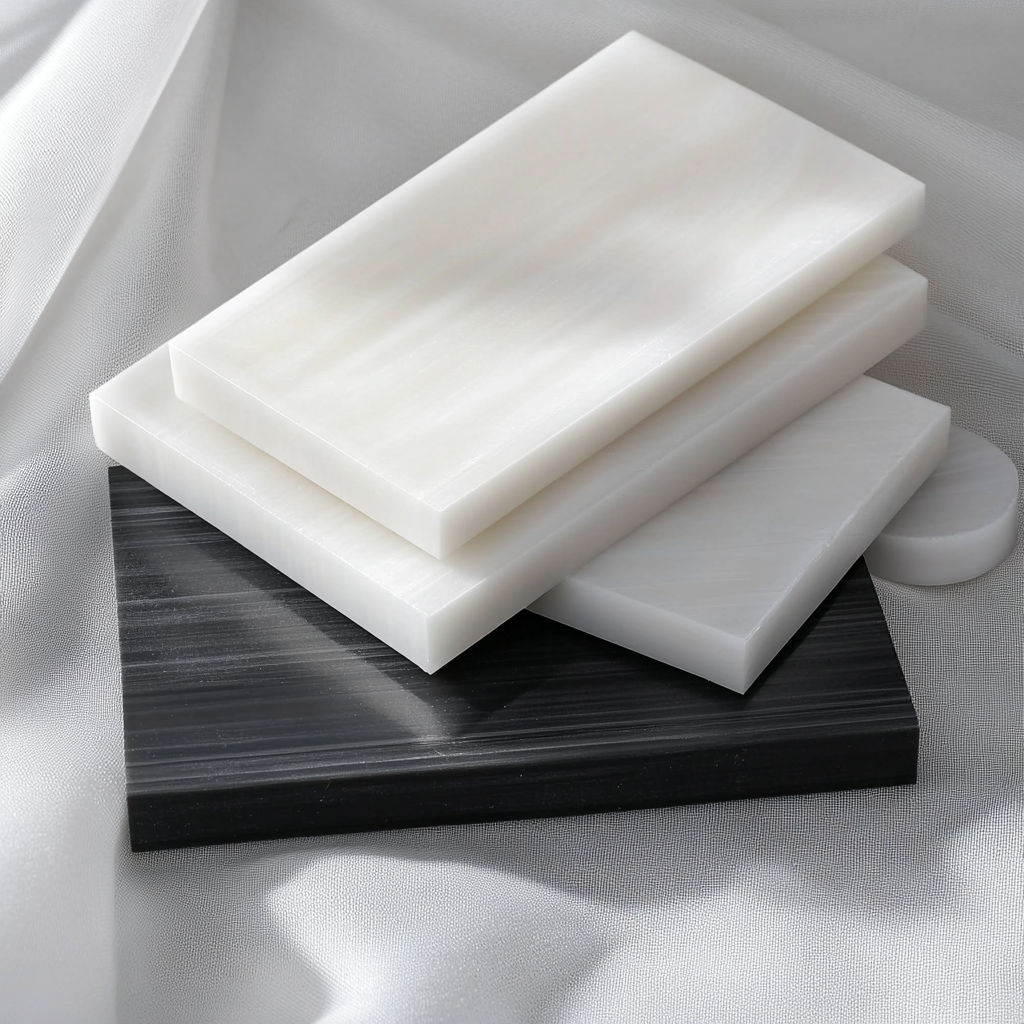
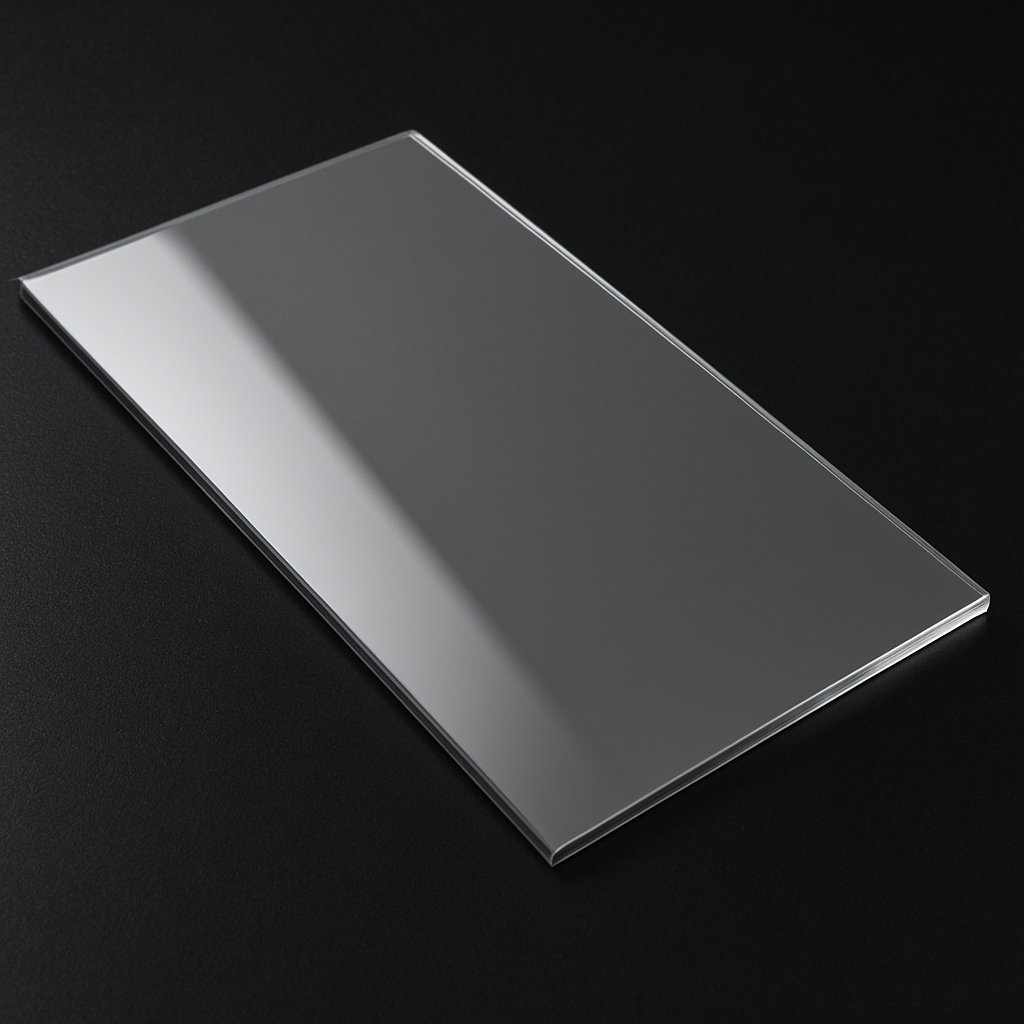
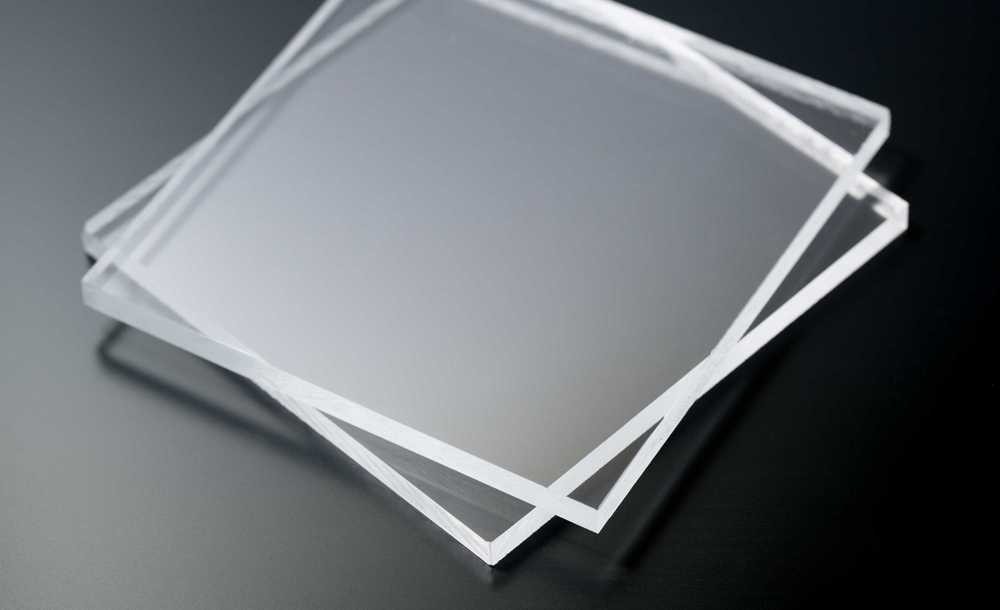
Acrylic — plexiglass, Plexiglas®, PMMA, all the same material — passes more light than glass, weighs half as much, and will not yellow in the sun. It is our highest-volume material. The part most people miss is that not all acrylic is the same: we stock cell cast, and for anything you are going to machine, laser, flame polish, or glue, that choice matters more than the brand on the masking.
Stock & Sizes
What we keep on the floor in Sparks
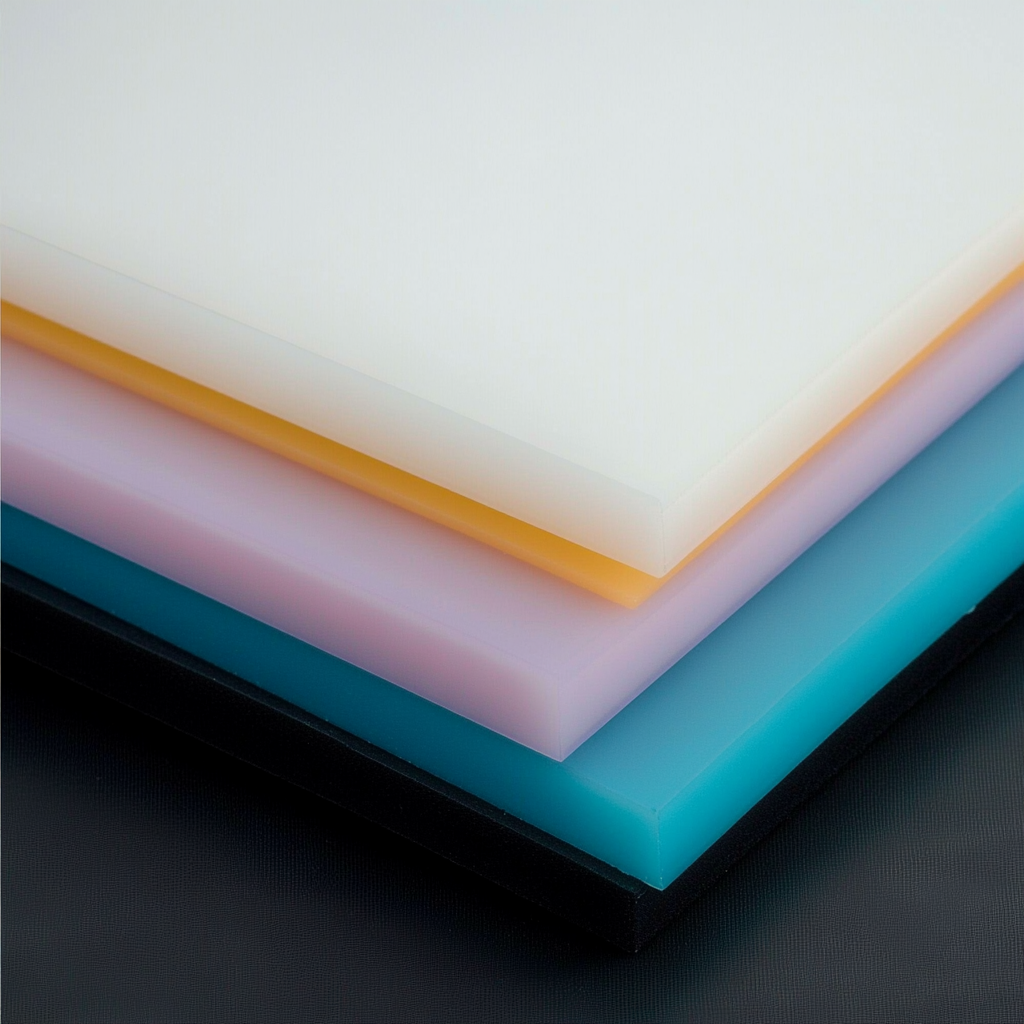
Clear, white, black, and colored cell cast acrylic in eight thicknesses, cut to size the same day — one piece or a full sheet. The gauges are drawn edge-on beside each size, all at the same scale, so you can see the difference rather than work it out.
| Thickness | Decimal | Edge on, to scale | Cut to size |
|---|---|---|---|
| 1/16″ | 0.0625″ | Same day | |
| 1/8″ | 0.125″ | Same day | |
| 3/16″ | 0.1875″ | Same day | |
| 1/4″ | 0.250″ | Same day | |
| 3/8″ | 0.375″ | Same day | |
| 1/2″ | 0.500″ | Same day | |
| 3/4″ | 0.750″ | Same day | |
| 1″ | 1.000″ | Same day |
Specialty colors, matte and non-glare finishes, and mirrored acrylic come in on short lead times — ask and we will confirm the lead time with the price before you plan around it.
Tell us the thickness, the finished size, and what the part does. Half the time we can save you money by nesting it out of a remnant that is already cut.
Heavy plate, in stock
Thick acrylic plate is normally a mill order with a lead time. We keep 2″ through 3-1/2″ on the rack in Sparks — full sheets when you need the whole thing, or cut to your size when you do not.
| Thickness | Decimal | How it comes |
|---|---|---|
| 2″ | 2.000″ | Full sheet or cut to size |
| 2-1/2″ | 2.500″ | Full sheet or cut to size |
| 3″ | 3.000″ | Full sheet or cut to size |
| 3-1/2″ | 3.500″ | Full sheet or cut to size |
Heavy plate moves in small quantities, so call with your size before you plan the week around it and we will confirm it is on the rack. If you need it this week, that call is worth making — the alternative is usually a mill lead time.
Our Material: Acrycast® by Calsak
We buy Acrycast, Calsak Plastics' cell cast acrylic. Cell casting is the slow way to make acrylic: liquid monomer is poured between two glass plates and polymerized in a water bath over hours. That process is what produces the high molecular weight, and the high molecular weight is what produces every advantage below. It is also why cell cast costs more than extruded and why the thickness tolerance is looser — you are trading dimensional precision for material quality.
Acrycast comes in clear, translucent, and opaque, with custom color matching available, in gauges from thin sheet through thick plate. Calsak also make Acrycast N2, a high-clarity casting resin — a different product from the sheet, aimed at art, prototyping and display work rather than a mil-spec sheet grade.
If a job actually calls for extruded — a thermoformed part where tight thickness control matters more than edge quality, or a high-volume cost-driven run — say so and we will source it. We are not going to sell you the expensive sheet for a job that does not need it.
Cell Cast vs. Extruded
This is the single most useful thing to understand about acrylic, and it is the reason a part that came out beautifully last time comes out cloudy and cracked this time. Same material on paper. Very different behavior in the shop.
| Cell cast (what we stock) | Extruded | |
|---|---|---|
| Molecular weight | High | Lower |
| Machining & routing | Cuts clean, chips clear, holds an edge | Softens and gums the cutter, melts at the kerf |
| Laser engraving | Engraves frosty white — high contrast | Engraves nearly clear — you cannot read it |
| Laser cutting | Cuts well; edge slightly less polished | Flame-polished, glass-clear cut edge |
| Flame polishing | Polishes properly | Poor — tends to craze |
| Solvent cementing | Strong joints, resists crazing | Crazes easily around the joint |
| Chemical resistance | Better | Lower |
| Thickness tolerance | Looser — varies within the sheet | Tight and consistent |
| Thermoforming | Forms at 340–380°F. Holds detail, less shrink-back | Forms at 290–320°F — easier and cheaper to run |
| Cost | Higher | Lower |
| Best for | Machined and fabricated parts, laser work, cemented assemblies, aquariums, thick plate, anything visible | Thermoformed parts, tight-tolerance gauges, cost-driven volume, simple flat glazing |
Short version: if the sheet gets cut, glued, polished, or looked at, buy cell cast. If it gets formed to a mold or has to hit a thickness spec, extruded may be the better buy. Nine out of ten jobs that come through our door are the first kind, which is why cell cast is what sits on the rack.
Typical Properties
| Property | Test method | Typical value |
|---|---|---|
| Optical & physical | ||
| Light transmission, clear | ASTM D 1003 | 92% Calsak published |
| Refractive index | ASTM D 542 | 1.49 Calsak published |
| Specific gravity | ASTM D 792 | 1.19 |
| Water absorption, 24 hr | ASTM D 570 | 0.2–0.3% |
| Mechanical | ||
| Tensile strength | ASTM D 638 | 10,000–11,000 psi Calsak published 10,000+ |
| Tensile modulus | ASTM D 638 | 450,000 psi |
| Elongation at break | ASTM D 638 | 4–5% |
| Flexural strength | ASTM D 790 | 16,000 psi |
| Flexural modulus | ASTM D 790 | 480,000 psi |
| Compressive strength | ASTM D 695 | 17,000 psi |
| Izod impact, notched | ASTM D 256 | 0.3–0.4 ft·lbs/in |
| Rockwell hardness | ASTM D 785 | M 93–100 |
| Thermal | ||
| Heat deflection @ 264 psi | ASTM D 648 | 205–215°F (approx. 100°C) Calsak published 100°C |
| Max continuous service temperature | — | approx. 180°F |
| Forming temperature | — | 340–380°F (cell cast) |
| Coefficient of thermal expansion | ASTM D 696 | 0.000041 in/in/°F |
Rows marked Calsak published are Calsak's figures for Acrycast. The rest are typical published values for cell cast acrylic sheet, given as a design starting point — typical properties, not specifications. Two things engineers ask us about that are worth stating plainly: notched Izod of 0.3–0.4 ft·lbs/in is low, so acrylic is brittle in notch-sensitive parts — never put a sharp internal corner in a loaded acrylic part. And acrylic is a combustible thermoplastic. Where a fire rating governs the application, tell us and we will get you the specific test data for the sheet rather than a general claim.
Clarity & Surface, on Charts
Acrylic edges out glass on light — and unlike glass it holds that number as it gets thicker. Standard float glass carries iron that gives it a green cast (that is the green edge you see on a cut pane), so a 1/2″ pane drops to about 85% while acrylic stays at 92%. The bigger practical difference is weight and breakage, not these few points of transmission. Source: Vitro published clear float data.
Acrylic holds a surface far better than bare polycarbonate. This is the reason a display or a sign face made from acrylic still looks new years later, and it is the reason we ask what the part does before we quote the material. Where impact matters more than appearance, the trade goes the other way — see the full comparison.
Acrylic is less than half the weight of the same panel in glass. On a large sign face, a skylight, or anything going up a ladder, that is not a specification detail — it is the difference between a two-person install and a lift.
Manufacturer documents for this material.
Grades marked In stock are on the rack in Sparks; the rest we bring in to order. The sheet you download is the sheet we quote from.
Acrycast® is a trademark of Calsak Plastics. Where we host a manufacturer data sheet, the only thing we add is a “Distributed by” band across the bottom of each page so you know who to call locally; the manufacturer's content, disclaimers and page count stay exactly as issued. Safety Data Sheets get the same band and nothing else; the manufacturer's content is untouched. Need a certificate of compliance for a specific lot? Ask when you order.
Where It Gets Used
Acrylic or Polycarbonate?
Appearance versus impact. Acrylic is clearer at 92%, holds a polished edge, resists scratching far better, will not yellow, and costs less. Polycarbonate takes roughly 33 times the impact energy on the ASTM D 3763 test (800 in·lbs against acrylic's 24, with glass at 6) and can be drilled and cold-bent without cracking — but it scratches easily unless you buy the abrasion-resistant grade, and it costs more. The rule we give people: if someone could get hurt when it breaks, use polycarbonate. If it is a display, a sign face, or a cover nobody is going to hit, use acrylic and put the money somewhere else. Full side-by-side comparison with the numbers →
Fabrication
We cut acrylic to size, laser cut and engrave it, CNC rout it, line-bend it, polish edges, and solvent-cement assemblies in our Sparks shop. One detail worth knowing if you are having letters or plaques engraved: cell cast is the grade that engraves frosty white, which is what gives you contrast. Extruded engraves almost clear and you cannot read it. Extruded does give the cleaner flame-polished edge on a pure vector cut — tell us which matters on your part and we will pull the right sheet.
Four things worth knowing before you draw the part. No sharp internal corners — acrylic is notch sensitive and a square inside corner is a crack waiting to start; put a radius in it. Drill with clearance, never a tight hole, and use a plastic-point bit; a standard twist drill grabs and cracks the sheet. Anneal after machining if the part will see solvent cement or sustained load — machining leaves internal stress and stressed acrylic crazes at the joint months later. And it moves: 0.000041 in/in/°F, roughly six times steel, so a 96″ panel grows about a quarter inch across a 70°F swing. Slot the holes.
Common Questions
What is the difference between acrylic and plexiglass?
Nothing. Acrylic is the material (PMMA). Plexiglas® is a brand of it, the same way people say Kleenex for tissue. Our brand is Acrycast by Calsak. If a drawing calls out Plexiglas, Lucite, Perspex, Optix, or Acrylite, it is calling out acrylic and we can supply it — though check whether the drawing needs cell cast or extruded, because that difference is real. Half the plastics industry goes by a brand name; here is what the rest of them translate to.
Cell cast or extruded — which do I need?
Cell cast if the sheet gets machined, routed, laser engraved, flame polished, solvent cemented, or simply looked at closely. Extruded if the part gets thermoformed to a mold or has to hold a tight thickness tolerance, or if it is a high-volume job where cost drives everything. We stock cell cast because that is what most jobs need, and we will source extruded when yours does not.
Why did my acrylic part crack around the glued joint?
Almost always stress crazing. Machining, routing, and drilling leave internal stress in the sheet, and solvent cement finds it. The fix is annealing — a controlled heat cycle after machining and before cementing that relaxes the stress out. It is also why sharp internal corners fail: they concentrate the same stress. If you are building a cemented assembly that has to last, tell us and we will handle the annealing.
Will it yellow outdoors?
No. This is acrylic's best trick and the main reason it beats polycarbonate on signage. PMMA is inherently UV stable — outdoor acrylic signs hold their clarity for decades. Polycarbonate needs a UV-protective cap layer to do the same thing, and if that layer is installed facing the wrong way it yellows.
How do I clean it without ruining it?
Mild soap and water with a clean soft cloth. Never use ammonia glass cleaner, alcohol, or acetone — they craze the surface and the damage is permanent. Do not dry-wipe a dusty sheet either; that is how the fine scratches get there. Leave the masking on until the part is installed.
How thick do I need for a tank or aquarium panel?
It depends on the water depth, the panel span, and whether the top is braced, and it is not a number to guess at — acrylic creeps under sustained load, so a panel that holds at first can bow over a year. Give us the internal dimensions and the water height and we will work it against published deflection tables. Cell cast is the correct grade for this; extruded is not.
Can you cut it to size today?
Usually, yes. Clear, white, black, and colored sheet is stocked in Sparks and cut the same day, from one piece to a full sheet. Send a drawing, a sketch on a napkin, or the broken original. Free delivery in Reno, Sparks, Carson City, Fernley and USA Parkway.
One hour. Tomorrow. Or today when it can’t wait.
We stock it here and we run our own van. Three ways to get material — take the one you need.